

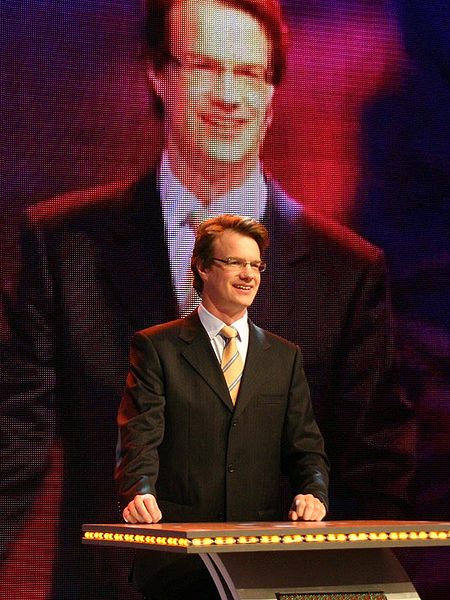
 I find it unlikely that there could be a foreigner in China that doesn’t know the name Dashan, and there’s certainly no Canadians unaware of the mystical Big Mountain of Chinese. 大山 comparisons, jokes and CCTV9 Chinese lessons have been a formative staple over the course of my time in China.
This past November the following question was posted on Quora: Why do so many Chinese learners seem to hate Dashan (Mark Rowswell)? He seems like a nice guy. Does he secretly eat children or something?. I’m sure we all have our own answers to that question, but none are likely to come close to the insight and self-reflection that the big Canuck himself answered with yesterday.
Mark Rowswell, the man behind the Mandarin, broke it down into 5 reasons:
- Overuse – People are sick and tired of hearing the name “Dashanâ€;
- Resentment (Part A) – Dashan’s not the only Westerner who speaks Chinese fluently;
- Resentment (Part B) – Being a foreign resident in China is not easy and Dashan gets all the breaks;
- Political/Cultural – People wish Dashan had more of an edge;
- Stereotyping – The assumption that Dashan is a performing monkey.
The whole answer is a bit lengthy, but well worth the read. Here are a few choice excerpts:
On why Dashan is so popular (related to #2 above):
… Dashan represents or symbolizes something very powerful to a Chinese audience. I don’t want to get too deeply into this, because my answer is already running too long, but let me say this: Chinese have a very complex and conflicting view of themselves and the world at large. They have a very strong self-identity and sense of pride, and this leads to a strong sense of “us vs. them†and of being misunderstood and misaligned by the rest of the world, or the West in particular, as well as a strong sense that they are gradually losing their language and culture in the process of globalization. In the face of this, Dashan represents a Westerner who appreciates and respects China, who has learned the language and understands the culture and has even become “more Chinese than the Chineseâ€. It’s a very powerful and reassuring image that appeals to very deep-rooted emotions.
On being Canadian (related to #4 above):
Culturally, the Dashan character does tend to be quite Canadian. We’re just not as aggressive in general as Americans. The adjective most used to describe Canadians is “niceâ€. How dull and boring can you get?
Although Canada and America are very close culturally, there are some fundamental differences. Primarily, Canadians never consider themselves to be number one in anything apart from hockey. And although we are both relatively young nations built by successive waves of immigration, Canadians have a much weaker self-identity than Americans. We don’t have a strong mainstream culture of our own, which I think makes us more malleable culturally. When Canadians come to China, we don’t do things “the Canadian way†because nobody has the slightest idea what “the Canadian way†is. So we tend to adapt pretty well to different cultures.
On why Dashan isn’t political (also related to #4 above):
… So I work within cultural norms. This spills over into the political realm, because, to be honest, Chinese cultural acceptance of foreign political criticism is almost nil. In short, I don’t have to worry about what government censors might say because Chinese audiences would never let me get that far anyway.
I could make a short public statement like that of Christian Bale recently or Björk a few years ago. It’s very easy to do and ensures you get very good coverage in the Western media. You go home and everyone thinks you are a person of moral conviction who stood up to the great Chinese monster. But the fact is that these kinds of statements elicit almost no sympathy whatsoever from ordinary Chinese citizens. They simply are not culturally acceptable to the broad Chinese audience. And it’s very difficult to see what impact they have other than to further convince ordinary Chinese people that China is misunderstood and that the Western world is antagonistic towards China and resentful of China’s development. What use is that?
I’m curious to read what others think of Dashan. John, of Sinosplice, mentioned in his post on this topic that, “the hubbub about Dashan has finally started to die down”. I can’t tell if this is true, or if after a certain number of years you just stop noticing it. Any FOB laowai still cringe at the mention of Dashan by a taxi driver? Do the new generation of foreigners in China even know who Dashan is?







I’m Canadian and I’m not sure if I qualify as a “new” generation foreigner, since the turn over here seems to be about once every three months and I’ve been consistently in and out of China since 2006.
I do cringe when Dashan is mentioned. In fact, I take a motorbike nearly everywhere to avoid the sort of taxi drivers who insist on mentioning him.
I’m really impressed with the excerpts printed above, however. They show a real knowledge of China. What I wonder, is however, if any criticism of China will is viewed by Chinese as an example of how “the world just doesn’t understand us,” how should I react to the fact that the extent of the majority of Chinese people’s understanding of my country is that we have an annoying laowai who smiles like a moron and speaks really good Chinese?
Well, are there a billion of you?
I’m not FOB (first visited China in 1999 and moved here permanently in 2005). I almost never get compared to Dashan, and I don’t resent him, probably for that reason. Perhaps it’s because I’m a girl? Other Lady Laowai wanna chime in on if Dashan’s name comes up when they speak Chinese?
Or perhaps it has nothing to do with gender and it’s just because my Chinese level doesn’t even bear a (negative) comparison to Dashan. Sigh. Must go study Chinese now….
He’s a regular guy, married, two kids, takes them camping and horse riding in Mongolia…leave him alone. Dashan is a character, sometimes people find it hard to separate the real person from the myth or don’t want to believe there’s a difference.
Through the Chinese media presentation of him I do see him as more of a dancing monkey that speaks Chinese and like Ryan said being more Chinese than Chinese. I saw last years Chinese new year special on CCTV, it had other Chinese speaking westerners on it so they were showing something a little different than just DaShan being overly Chinese…
He’s probably a really nice guy, but the Chinese media put him on a pedestal and say “This is what you foreigners here should be like”
The only real problem I have with DaShan is he’s too Chinese and I do envy his Chinese ability, but I’m working on it 😉 x
I came to Canada in 1988 from China without any English background. I stayed with my sponsors and learned my English from ground zero. One thing I always remember until today is that when I answered their gratitude with the sentence “It’s my pleasure”. You should have seen the thrill on their faces. This is the exactly the same thing when Chinese hear a foreigner correctly using Chinese words
Now I come to think of it, the Dashan comparison is not something I have heard (in Beijing) for a few years. Maybe it’s because especially in somewhere like Beijing, the average Chinese person is long past the idea that Chinese is next to impossible to get to grips with.
Your average Beijing taxi driver is simply that much more likely to deal with perhaps dozens of foreigners a week for whom conversing in Chinese is not much trouble.
If anything, could we be witnessing the beginning of the end for ‘shock and awe’ at Mandarin skills and the start of the period of an expected and demanded degree of fluency from local listeners?
Indeed, I’ve noticed an ever increasing phenomenon over the last few years of some Chinese people mocking the butchered tones of those foreigners less versed in the language.
Could there be a pattern forming of how us laowai and our language skills (or lack of) are viewed? From wonderment to amusement to impatience?
Wise words said to me from many years ago: “Always remember you are a guest in China”. As soon as any foreigner starts getting beyond that in attitude, problems begin.
Dashan incidentally is a character in the long Chinese tradititon of taking the piss out of other characters (including old Chinese men with their birdcages and pot bellies) as anyone who watches Chinese TV – especially at Spring Festival will know. His character is not especially targetted at foreigners, it’s just a send up. As for the man – he’s quite a cool bloke actually. Again, don’t confuse a TV character with the private individual.
PS: Christian Bale isn’t REALLY Batman.
@CDE – he’s not? Hot Damn! That’s nearly as bad as learning about Santa Claus.
@Chris Devonshire-Ellis: Don’t you think the idea of being a permanent ‘guest’ is just a tiny bit insulting?
I respect Dashan for not wanting to question certain sensitive issues while in the full glare of the media spotlight, there is a time and a place for everything.
Nevertheless, that doesn’t mean one must never say a bad word about or offer constructive criticism of, China.
Up to you, though, if you want to be the good little dumb laowai in the corner that is an unquestioning ‘friend of China’, then be my guest, as well as China’s.
It’s pretty funny how Mark refers to Dashan in the third person… like a ‘character’ he created
Yeah I remember when Ashton Kutcher tried to distance himself from the goofy spaz “Kelso” character too. Eventually (6 movies later) it caught on.
@Jiong – I’d say that behaving with decorum in someone elses country and culture is an asset rather than being, as you say, a dumb little laowai. But that’s just my dumb little opinion after all. Good luck with your version. – Chris
@CDE – Behaving with decorum is excellent advice. How much decorum is involved with taking 5-minute Hong Kong General Chamber of Commerce meet & greets with a variety of government officials and then lying about it — for years, mind you — and writing that they are your pals and offer you significant insider details when, as the Chinese government has repeatedly stated, it’s a total lie? Since Dashan isn’t known as a liar or a fraud, I think he’s perfectly acceptable. Not so much CDE though.
I seem to recall what happened is that Chris indeed met with Chinese officials who let slip an important item about the RMB/USD exchange rate. Chris published that and the exchange rate slid by billions of dollars overnight. To recover the markets Beijing denied the comment there had been an “interview” which in China is defined as a one on one meeting not a group forum as Chris was in. They didn’t actually deny the rate issue and conned people into thinking the meeting hadn’t actually happened, when in fact it had. Chris took a lot of shit for that but you called it wrong. Shortly after the protocol for people interacting with Government ministers was changed, and the Minister concerned retired. Chris is still active in China so go figure that one out. As for the Chinese Government telling porky pies – surely not.
I’m foreigner living in China for more than half year, not teaching and never heard about Dashan and don’t know why should I, while I read daily at least 10-20 websites about China, but until now it seemed unimportant to know about him
@Chris – You seem to be confusing expressing a critical opinion with being rude and bad mannered. I am perfectly well behaved where ever I am, even in my ‘own’ country where by your rule I am no longer a guest and can go around insulting people left, right and centre.
I suppose you’d say that of course a tourist of 2 weeks in China is a guest, or even a businessman here for a month is a guest. How about a student doing a year’s language course, yep, you’d still call him/her a guest. How about someone who’s been here years and has invested in a business that employs locals and pays taxes, still a guest? And if that person stays for decades and even marries a local and raises a family as the breadwinner, are you going to force the term ‘guest’ on them, still?
Can you see how that might be just a wee bit insulting?
Yeah, whatever. Your issue not mine.
Hes right and you’re inarticulate
The fact that I always found 大山 to be really bland and annoying (I’m an individualist and opinionated United Statsian-I use the pc term b/c he’s technically an American too), and that I was (and am) jealous of his Chinese skills, are what led me to my distaste for him. I think there’s a lot of ego involved, and most language learners who take their task seriously are really trying to please the Chinese around them (which really makes one motivated to perform, but a bit resentful when some middle-aged Canadian guy can talk circles around you). I don’t know of another white Canadian family-man I bear any resentment towards. That being said, I found his comments quite insightful, and appreciate the separation between the character and the person. Way to go Mark Roswell, for speaking such damn good Chinese. By pissing off thousands of laowai who secretly want to steal your tongue, you provide the the perfect motivation to improve language competency.
It is amazing how learning a language and learning a culture can be divorced. That is what I see in China where every student has to learn English but few know about the places or ways or thoughts of foreigners.
Does Da Shan help Chinese people understand what is do different about Chinese and English speaking cultures? I don’t think so.
If the issue is that you have to always see yourself as a guest (and be polite), then one should not try to help the Chinese understand western culture. The official media and the English education curriculum here doesn’t want to teach that.
Da Shan is an obstacle for foreigners who want their students and counterparts to be anything but flippant about foreign culture because Da Shan shows the Chinese that foreigners can behave like a pet.
English speaking culture is not a threat to China but the longer I am here the more I see that there are few ways for regular Chinese people to be exposed to authentic foreign. Too bad Da Shan doesn’t (or can’t) do something about that.
You’re totally right about the disconnect between language and culture – you’ll meet plenty of young Chinese students, even some who’ve lived abroad for a while, who still come out with silly stereotypes about laowailand.
This is understandable, though, for most people (not just Chinese) a foreign language is simply a tool for expressing your own culture and ideas to another person, not necessarily learning their culture, too.
That doesn’t stop it being annoying and it is well known that Chinese expect foreign learners to wet themselves with excitement over Chinese poetry, fan dancing and agree with the entire Chinese world outlook on certain regions beginning with ‘T’.
You’re right to say Dashan does nothing to redress the balance and he isn’t supposed to. Dashan (as he admits) reinforces the Chinese notion of the student exceeding the master which is accentuated by the foreigner exceeding the Chinese person in their own culture.
It’s good to want to dispel myths about the West and share with Chinese people some of the other ways of looking at things. The key is to approach the topic through culturally accepted means and by showing cultural sensitivity.
The advice given above by CDE is fine for people just starting out learning the language and culture, and while one should always be polite, this guest attitude only serves to hinder greater and more meaningful interaction, or even friendship. After all, how can you be friends with a Chinese person if you think of yourself as his guest instead of his equal?
True. I
As a Chinese, I also dont like Dashan. cause he seems cater to the Chinese government,CCTV.He should know who pay for him,It is the Chinese people!!
Dashan nowadays is much less present in ads, TV, interviews, you name it, compared to a couple of years ago. I had reservations towards him as well back then, but, after encountering more and more inhabitants of the Laowai-Biotope over the years, I recognized that he did more than many others to bridge the cultural divide.
As for the guest issue, I agree with CDE’s wise adviser. And I don’t think there is anything negative about it. Quite the opposite – as a guest, one listens and is listened to.
On the other hand, there are more wise words, always at least in the back of my mind:
‘Whenever I take my ways abroad, what bloody fools I see, but, such the justice of the Lord, they think the same of me.’
Richard Hughes claimed this to be an ancient Chinese proverb, but it sounds much more like coming from the man himself. He, too, was a wise man.
I’m sorry but people get very angry if they actually move to a foreign country and build a life there, if they are forced into forever remaining a guest because the sensitive Chinese psyche ant take any criticism at all. Who owns China – the government, the people? The government weren’t voted for by the people so they have no legitimate power claim. Therefore they can be criticized by anyone. The Chinese are a diverse bunch of people. It could even be true that a Mongolian finds more in common with an American than with a native Ninboese! Is there really one idea of a foreigner, and one idea of a Chinese? So why don’t we just assume that we are all citizens of the world with roots in countries. Can you really all claim you love your country that much anyway? Americans spend most of their time gawping at Angela Jolie or watching an Italian movie director like Bertolucci ‘s The Godfather, whilst drinking coffee imported from Kenya and eating kungpo chicken takeout.
Chinese students are obsessed with American basketball and English football. They have their aggressive nationalism forced on them mostly by their education system.
For me, a Chineseman can criticize England and we can criticize China, because ‘the good’ is really a Platonic Universal, The Good, which transcends all countries and is heavenly.
T
But how did the guy manage to become so visible in China and still manage to particpate in alien autopsies in the USA?
Are you thinking “Roswell”?
More than likely Steve is just not thinking.
Pingback: Harper en Chine « Groupe JH Chine
In my opinion, Dashan happened to be the very first foreigner under spot light that amazed Chinese people with his fluent Chinese. At the time that he became well-know to almost every single Chinese household, there were no Internet or any other way of media broadcast other than TV. His debut in CCTV Chinese New Year show was viewed by almost all Chinese who were sitting in front of TV at that moment since all other channels were broadcasting the same show – that was the 80’s of China. His overnight fame was also a reflection of Chinese’s rising admiration of the western culture at that time of the centuary, especially among the young generation.
You might wonder what he did for western culture by speaking Chinese? Not much as a matter of fact, but the image he delivered on stage at those years – healthy, courteous, modest, humorous and handsome, together with shockingly fluent oral Chinese, is good enough to brand the “good” western culture to Chinese as friendly, humorous and smart.
Nowadays, people in big cities of China are getting used to spot foreigner around speaking good Chinese. Well, still, a fluent speaker is still not that easy to find(this blog might be a better place to find some :-)) All I need to say is Dashan has built a connection between the two sides of culture. I’m looking forward to seeing people from western to add more angles and insights into Chinese culture, it will only benefit more to people on both sides of culture.
The only thing worse would be if Da Shan had a mullet. Why are we such a bland, blank people?
But this is beside the point. I’m a firm believer in understanding and appreciating different perspectives. However, many of China’s perspectives (I’m speaking from a foreign policy position since that’s my field) are simply out of date. (For example, adhering to Westphalian norms when the rest of the world has moved on to post-Westphalian norms). I do NOT think the answer is other countries simply forcing China to adopt norms that its not ready to; as China integrates more with the world Beijing is learning that it doesn’t have the luxury of strictly adhering to these black and white, Old World notions. Beijing is learning and adjusting on its own–and that is to be ENCOURAGED and supported. Someone like Da Shan, who passively endorses the kind of thinking that does not help China develop culturally and modernize, contributes to the problem. And, as someone from a Western culture who has benefitted greatly from those norms and policies of the modern era, Da Shan should not simply sweep them aside because Chinese people are not yet ready for them or do not yet understand their merit (though they are figuring this out slowly on their own). He need not force his views down others throats or be overly political–this is unattractive in any culture–but he should HELP Chinese people update their perspectives in the areas that he can. After all, this is what the Chinese government wants to do to!
Dashan speaks chinese fluently, most professors in chinese are not even near his level.They hate him because they are envious.They hate him because he is better than them.
Althought many westerners can speak mandarin today, extremely few speaks it like him.Realy!!!!!!!!!Even professional interpreters.Very few
Da Shan speakes better chinese than me…and I am fine with it. He has language talent. Though many other laowais speak good chinese too. I read an interview in a shanghai newspaper, the shanghai comic Suhail Nasir said he would be proud of himself if he could speak 25% of what da shan can speak, so its not true that laowais feel jealous of him.
What none of you are getting is that Dashan is obviously a government prop to facilitate acceptance of Western culture because Deng Shao Ping saw our economics and products as the only way out of the Communist induced economic stagnation. The fact that hes enormously tslented is interesting, but statistically, there will be people like him and the government knows this. Chinese people, after being tradhed by us in the Opium war, turned into slaves in the twenties Shang Hai, eotshipped Mao as their best alternative. Mark is a conduit for them to get back their self esteem and still accept our culture! Mark aka Da Shan, is one of the cleverest propoganda tools of the twentieth century.
let me put it another way; there are no riots in Mcdonalds, Chine love our products wheteas we boycott theirs, they accept yhe fact that English teachers with no experience earn more than a Masters grad, work mo more than two hours a day and pay no rent..course there are exceptions..
Why do u think this is? Even the poorest elementd os society love Da Shan! Its because a big guy (Chinrse respect strength quite a lot, they are a bit like John Wayne) with a gooey smile ingrstiates himself with the holy Chinese culture, speaks great Chinese, which althouhh part of yhe humour(hes better than the Chinese guy) is again another subtle form of pandering. So now there will be no blood in the rivers and fighting in the syreeys, long live the new China for ten thousand years!!!!!
I am sorry Da Shan, but this goes out to you personally. You are a product of the times more evidence of the Puritan ethics that hard work and talent will be rewarded by God; or perhaps both? I have asked Chinese about you; they tend to believe that you were being used by the government in the same way Lei Feng isbeing used, to promote good feeling and reduce some of those 80,000 skirmishes that occur anually. Well, at least you existed. But, both of you are a little condescending to peoples intelligrnce,because both of you ate really different aspects of Big Brothers big red arm try to feel up the Chinese public. Well, in your case it may have worked. Well done!
but maybe a true Lei Feng:-) sorry, bit hung over, you did a lot to break down enmity!!!!!
Wow, Im really getting the full story now, just reminds me that i should rate my own intuitions. It turns out that Da Shan started only after the Tiannamen Square massacre, and right afterwards Bush reachrd out to the government to prevent any alienation of trade opportnities or cultural protectionism so to speak. Then we have the most famous cross talker in China whose number one student (most assuredly government chosen,nless Da Shan was already famous or happened to have five hundred bucks per class to shell out,lets not push the ‘youve got potential, son’card!) was Mark Roswell. Remember, no ratings and the character would have been rehearsed, ceryainly concocted to a large extent and totally required by the political situation. Im sorry, but Da Shan is brilliant, but trsin with Mcenroe or play guiyar with Slash and you will be very good. What angrrs me is the hipocricy. Right now, every bus, bill board i see in every public place is about lei Feng, a man whose existence has never been proven yet stands as a moral remindr of what we should be. Why now? Duh? Its because there was a huge uproar about the child runover and passed by by fourteen people. I have government friends who are told to pusj Lei Feng at whatever cost, im telling ypu, these orders come from the top.
Please, im sick of this,because its so much more than the Chinese public, they never asked for him, just as they were told pn the news to condemn the evil cult of falun gong for years, so naturally all Chinese do, because they are programmef to, jusy as they all firmly believe lei feng existed, having no proof at all except a photo which is unlikely to be of him.
So please see this for what it really is, and a little less hypocricy, Mark, i know you know..
At the end of the day, perhaps the government and Da Shan should both get a lot of credit for facilitating cultural acceptance of a ever larger Western presence in China.
After all, after so much anti Western feeling generated by Mao Zedong, and indeed, the school boys history book which justly lays blame for a century of humiliation at Imperial Wests door, how can Chinese accept any Western cultural infiltration through trade and education? Through people like Da Shan. Well done, government and Da Shan.
Well done,because the West owe it to China to bring their free market to Chinas aid.
But my theory, without having seen any Da Shan shows, is the Da Shan is a political pander. At this time, there was rising admiration for Western culture, but there was growing irritation with the lack of choice in the autocratic system, crystallizing in the Tiannamen Square protests, right when Da Shan first began to be aired. He is an example of Caesar offering games,games and more games because it cannot feed its people or give them freedom. Western culture, true Western culture is democracy. Caesar, that is, the CCP,denied this to their people but in return offered them a pander – hours of a Westerner himself pandering to Chinese.
If you think about Ancient Rome and basic propaganda, that’s how it works- the government doesnt want true electoral democracy and the multi party system because it would have to renounce its power and that means billions of yuan. Chinese politicians are much wealthier by salary comparison than US counterparts. Therefore, the government offers this pander so it can seem to be accepting Western culture and giving it a good brand name, thus also promoting good trade with America – again, something Chinesepliticians and business,en have become rich over.
That’s what Da Shan was all about, in my humble opinion.
In other words, Da Shan,in a nutshell is a pander.
Da Shan himself is a panderer,but he has to.
The government offers Da Shan as a pander to its people. Da Shan is an offering of ludic democracy, an offering of games for its rabble rousing yet earnestly suffering population. They may or may not know that the world, wrapped in the blind coverlets of Communism, is experiencing its first taste of both e onomic and expressive freedom. Thus, the government must be seen to offer its acceptance of this Western culture, capitalism and the market place of ideas. Rather than accept the market.ace of ideas,it casts the Westerner as having ALREADY accepted the Chinese conceptual basket in the peron of Da Shan. The compliment to the Chinese is also a warning – we must catch up with the clever Westerners who ave already mastered our culture! Yet since Da Shan is joking it,not destroying it,as in the Opium war, there can be no signaling of a new Age of Humiliation.
But ultimately,it’s a false product. Chinas due was getting freedom,just as the Soviet Empire did. What it got instead was Da Shan. A heavily diluted version of Westernisation and it’s merits. The face has been saved but the soulless lost. Like all political panders, it’s n excuse offering for repressing Chinese youths call for democracy, as the previous poster explained, this age was remarkable for its surging admiration of Western culture. The government shot them when they called for democracy and an end to corruption, but as a trade off,gave them Da Sha.
Clever eh?
Actually Chinese have different rules for politeness. It might be more polite to criticize a government in China,if this is how you feel. Chinese don’t say please and thank you so much. They smile instead. Perhaps this is because true piteness is true feeling. But they also smile at ou when they don’t like you lol
My last word is, Da Shan is a genius in a way. And he is an inspiration to me and everyone.
Da Shan is an OK guy, I didn’t know he was that big in China when I saw his lessons on CCTV.
But one thing that pisses me of regardless of who does it is when people use their hands in such a controlled way as he does. Reminds me of my teachers in school.
Big mountain brother is a good guy. He may acts as a pander but it was the only way to get accepted by the Chinese Government in the 1980s. He knows what democracy and liberty is but he didn’t push the Chinese (both government and people) to change.
He was there watching, playing boring stupid talk show, behaving like a friend from neighbor hood. He did affect me when I was a child, in his method.
Because of Da Shan, people began to know that there are friendly people in other countries.
Most Chinese people hate the Government but very few hate The Big Mountain Brother.
And I am personally very grateful for his help on donation during the last earthquake.
At the end, you are not the best western mandarin speaker anymore Big Mountain Brother!! A boy who speaks in 8 different accents beats you badly!
For me personally I don’t have a problem with DaShan. My Chinese is by no means great but within the area I live in I’m one of the better western mandarin speakers.
What I really dislike is the Chinese tendency to compare westerners’ Chinese ability. I get very tired of hearing “one day you will be like DaShan”. I don’t want to be ‘like’ DaShan. I just want to speak the language of the country I live in.
I think one of the reasons many laowai feel anger at the mention of DaShan isn’t because of jealousy, it’s because of the cultural frustration felt at a nation always comparing and judging.
My Chinese ability can’t just be mine. It has to be ‘better than hers but worse than his’.
*rant over*
One thing you have to understand first is, as I learnt from a Da Shan talk show, Da Shan the name is a joke. Its a country bumpkin name, so Da Shan is a Chinese peasant played by a Westerner, if you get the humour.
Da Shan uses street Chinese. The joke is similar to a Chinese talkinging in a Cockney accent to a Londoner and being more local than he is.
The geopolitical significance of this joke is this; it allows Chinese to accept Westerners where they were once villified. I dont need to stress why this was needed in the open 80s and 90s.
Da Shan also stresses the need for Chinese to catch up and outcompete the West, already beating Chinese at their own game.
It reminds me of Asterix and Obelix.
James, people compare you not just because of Da Shan but Confucianism. Chinese must elicit status, which is why they ask status questions. Questions about salary and country are status questions. Chinese compare. They dont declare. Chinese also are very indirect. They say oh tell me about youre Chinese website, its unpopular here. Its because they want to show it to their foreign friends. They cant just say that though. I hope that helps.
Da Shan respects the Chinese as I do. He is extremely articulate and eloquent in English and had an extremely good Chinese language teacher when he attended the University of Toronto. Canadians are masters of humour; thank you Jim Carrey, Mike Myers, Martin Short, and a host of others. Canadians generally are very intelligent. I lived in China for twenty years and whenever my Chinese students and friends mentioned the name Da Shan, it made me proud to be a Canadian. Da Shan doesn’t have to worry what foreigners think of him, because he is loved and admired by hundreds of millions of Chinese. ‘Nuff said.
Go DASHAN!
Dashan is a man who has done a fantastic job at his talent of Chinese. I personally admire the man for what he has achieve but the reason why westerner tend to dislike him is because he in general is cultured Chinese and in a sense has understanding of China that maybe only 5% percent of foreigner in china understand.
It is jealousy is obvious from the foreigner who expect to come to China and be worshipped… no… Chinese people not want to worship the foreigners.
I live in an area populated strongly by international student and I wish that more foreigners can be like Dashan. Everytime I see a foreigner lately I think to myself… not another one of those over confident and no shame people that want force change the chinese people to democracy.
but enough said… Dashan is the foreigner I respect and I think he is as chinese as most of the chinese, despite the heavy Caucasian appearance he is good for china and also good for Canada
Not a single foreigner comes to China “expecting to be worshiped”. This is a silly opinion which sometimes comes up when Chinese people talk about Westerners (because of course “foreigner” means Westerner).
What Westerners do expect is to be treated fairly and with respect, and unfortunately this doesn’t always happen in China. The fact is that a lot of Chinese don’t seem to be able to find a balance in the way they relate to the outside world. They either put foreigners on a pedestal and assume everything foreign to be better, or they take refuge in simplistic nationalism and then treat foreigners with suspicion and disdain. Just treating foreigners with respect as “different but equal” seems to be impossible. Then again it can’t be easy, since even within China people rarely treat each other that way.
“Everytime I see a foreigner lately I think to myself… not another one of those over confident and no shame people that want force change the chinese people to democracy.”
I don’t think anyone seriously thinks the Chinese can be forced to adopt democracy, perhaps a lot of people would like to convince them peacefully to adopt it, which is not the same thing.
“but enough said… Dashan is the foreigner I respect and I think he is as chinese as most of the chinese, despite the heavy Caucasian appearance he is good for china and also good for Canada”
You should respect foreigners even if they are not “as Chinese as most of the Chinese”. It is impossible for most people to learn to speak Chinese like Dashan as adults, but that doesn’t mean that they aren’t perfectly good people deserving of respect.